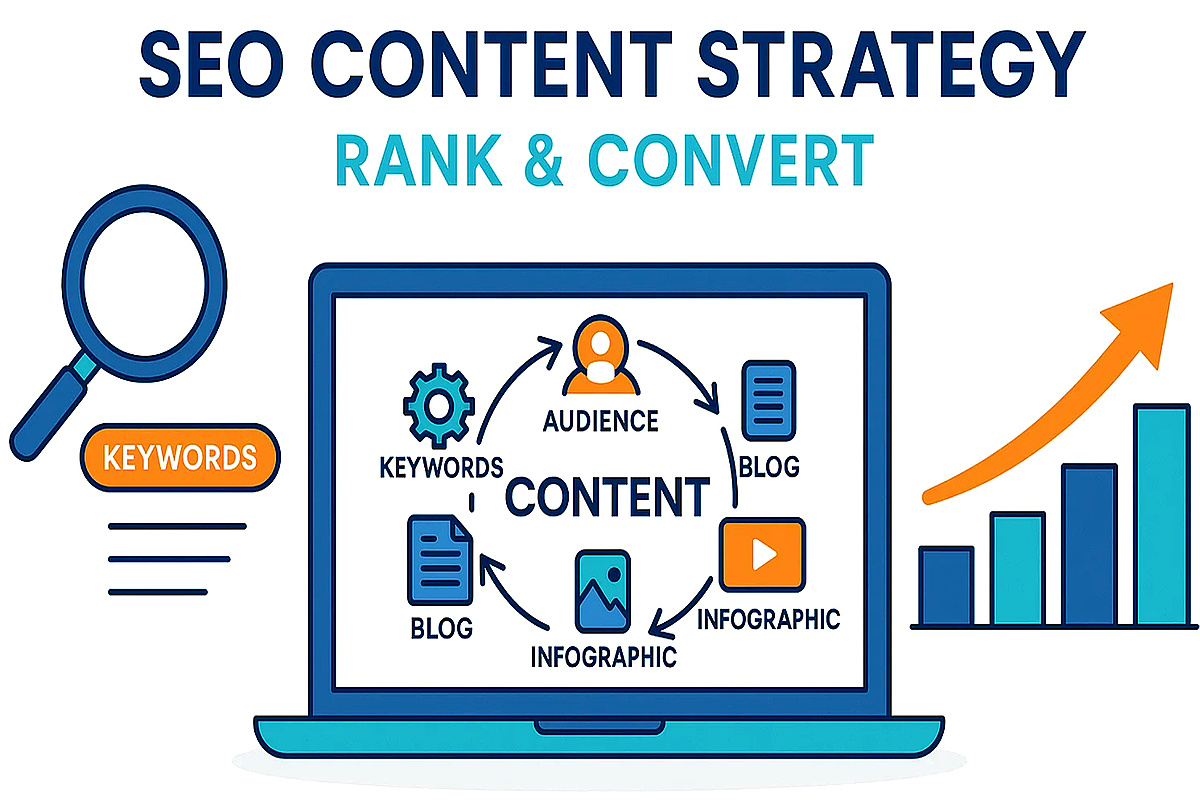
In the digital age, SEO is more than just rankings; it’s also about providing users with value while adhering to search engine standards.
SEO content should do more than bringing people to your website.
Traffic alone doesn’t grow a business. Rankings alone don’t generate revenue. Visibility without direction doesn’t build authority.
Strong SEO content does three things at the same time: it attracts the right audience, positions your expertise, and guides readers toward meaningful action. If your strategy is focused only on keywords and rankings, you’re only using part of its potential.
Let’s look at how to create content that both ranks and converts.
Start With Search Purpose, Not Just Keywords
Keywords matter. They’re foundational. But what matters even more is understanding why someone is searching.

Every search has intent. Typically, people are trying to learn something, compare options, find a specific brand, or take action.
For example:
- “What is SEO?”, they want information.
- “Best SEO services for small business” they’re comparing.
- “Hire SEO consultant near me” they’re ready to act.
If your content doesn’t match that intent, it won’t perform well no matter how well it’s optimized.
When someone is researching, educate them clearly. When they’re comparing, explain what differentiates you. When they’re ready to move forward, make the next step simple.
SEO isn’t just about being visible. It’s about being relevant at the exact moment someone needs you.
Create Focused, Purpose-Driven Content
High-performing content has a job to do.
Each page should focus on one core topic, solve a specific problem, and support a defined business goal. Many websites struggle because their content is too broad. When you try to cover everything at once, you dilute clarity and impact.
Instead of writing a generic article like “Marketing Tips for Businesses,” create focused pieces such as:
- “How Email Marketing Improves Client Retention for Service Businesses”
- “Local SEO Strategies for Small Retail Stores”
- “How to Build a Social Media Funnel That Generates Leads”
Focused content signals relevance to search engines and speaks directly to a specific need. That combination improves both ranking potential and conversion performance.
Before publishing, ask yourself:
- What exact question does this answer?
- Who is it for?
- What business objective does it support?
Clarity of purpose strengthens everything else.
Make It Easy to Read and Easy to Trust
Clarity is a competitive advantage.
Well-structured content performs better because both search engines and readers prefer it. Use clear headings, short paragraphs, logical flow, and straightforward language. When someone lands on your page, they should immediately understand what it’s about and whether it addresses their concern.
If visitors can quickly find what they need, they stay longer. That improves engagement signals, which supports rankings. More importantly, it builds credibility.
Avoid unnecessary complexity. Precision builds authority. Overcomplication weakens it.
Trust grows when your content feels organized, confident, and helpful.
Demonstrate Expertise Before Promoting Services
Conversion begins with confidence.
If readers don’t trust you yet, pushing services too early will feel premature. Strong SEO content shows understanding before asking for commitment.
That means addressing common challenges, explaining underlying problems, and offering practical insight. If you provide SEO services, for example, your content might explain why rankings stagnate, how algorithms evaluate websites, or what sustainable growth actually looks like.
When readers feel understood, trust develops naturally. At that point, introducing your service feels like a logical next step, not a sales pitch.
Authority first. Promotion second!
Guide Readers Toward a Clear Next Step
Traffic without direction doesn’t convert.
Every piece of content should include a clear and relevant call to action. The key is alignment. An educational blog post might invite someone to download a guide or join your email list. A comparison article might suggest booking a consultation. A service page might prompt a proposal request.
Be specific. Instead of saying “Contact us for more information,” clarify the outcome:
- “Schedule a 30-minute strategy call.”
- “Download the small business SEO checklist.”
- “Request a customized marketing plan.”
Conversion often happens throughout the page, not just at the bottom. Internal links to service pages, short case examples, testimonials, and FAQs that address objections all strengthen confidence. These elements should feel integrated, not intrusive.
Helpful first. Strategic second. Promotional third.
Align Content with Business Goals
Not all traffic is valuable.
Your SEO strategy should connect directly to your business objectives. If you want to sell consulting services, your content should attract decision-makers. If you’re promoting a digital product, create content that addresses the exact problems it solves. If you’re building recurring relationships, focus on education that nurtures trust over time.
Random traffic rarely converts. Targeted traffic does.
Define your core services, your ideal client profile, and your revenue priorities first. Then create content that supports those outcomes.
SEO works best when it’s integrated into broader business strategy, not treated as a standalone tactic.
Build Authority Over Time and Refine Strategically
Search engines evaluate overall expertise, not just individual pages. That’s why topical authority matters.
If you specialize in email marketing, for example, your website should cover beginner guides, advanced strategy, technical setup, case studies, common mistakes, and trends. Covering a subject comprehensively signals expertise. Over time, rankings become easier because your authority strengthens.
At the same time, SEO content requires measurement and refinement. Monitor organic traffic, keyword performance, time on page, and conversion rates.
If a page ranks but doesn’t convert, review clarity, intent alignment, and calls to action.
If it converts but doesn’t rank, improve keyword targeting, internal linking, or backlink support.
Data-driven refinement ensures your content continues to perform on both fronts.
SEO is a Long-Term Investment
u003cstrongu003eSEO content is not a short-term tactic. It’s a long-term asset.u003c/strongu003e
Further, SEO content should do more than rank. It should attract the right audience, demonstrate expertise, build trust, and guide decision-making.
When you align with search purpose, create focused and structured content, establish authority before promoting services, and provide clear next steps, your content works at every level.
It compounds over time!!!
A strong article can generate leads for years. Your website stops being a static brochure. It becomes a lead-generation system.
When built strategically, it strengthens visibility, authority, and conversion simultaneously.
And that is what turns traffic into growth.