Digital marketing offers businesses more opportunities than ever before.
You can run paid ads.
You can build email funnels.
You can post social media campaigns consistently.
You can launch webinars, create video content, and downloadable guides.
But if people can’t find you when they’re actively searching for what you offer, your digital strategy has a gap.
SEO is not just another marketing tactic. It is the structural foundation that supports everything else. When done correctly, it increases visibility, attracts high-intent audiences, builds authority, and supports long-term growth. If you’re investing in digital marketing, SEO should be part of the structure, not an afterthought.
SEO Aligns with Real Buyer Behavior
Every day, people search for answers, comparisons, and solutions. Those searches reflect real needs.
When someone types:
- “Best accounting software for small business”
- “Affordable web designer near me”
- “How to improve website conversion rate”
They’re not casually browsing. They’re evaluating options.
That’s what makes SEO powerful. It captures intent.
Social media can spark awareness. Paid ads can generate fast traffic. But search traffic often represents deeper consideration. SEO positions your business at the exact moment someone is thinking about a solution.
And not all traffic is equal.
Someone scrolling through social media may not be ready to act. Someone searching for “email marketing services for small businesses” likely is. SEO allows you to create content for every stage of the journey, from educational blog posts to decision-focused service pages, that is why you need to guide prospects from awareness to action.
Without SEO, you’re missing that entire pathway.
SEO Builds Long-Term Visibility and Authority
Paid advertising stops the moment your budget does.
SEO continues working.
A well-optimized article or service page can generate traffic for months or even years. That kind of durability reduces dependency on paid channels and creates compounding growth.
Over time:
- Each optimized page strengthens your domain.
- Each backlink reinforces credibility.
- Each update improves relevance.
SEO builds digital equity. It compounds.
It also shapes perception. Users tend to associate high search rankings with credibility. When your business consistently appears in relevant searches, you become recognized as an authority in your space.
That authority isn’t built through promotion alone. It’s built through comprehensive content, technical optimization, consistent publishing, and clear positioning. When potential clients repeatedly encounter your brand during their research, trust develops naturally.
SEO Strengthens Every Other Marketing Channel
SEO doesn’t operate in isolation. It enhances your entire marketing ecosystem.
Content Marketing
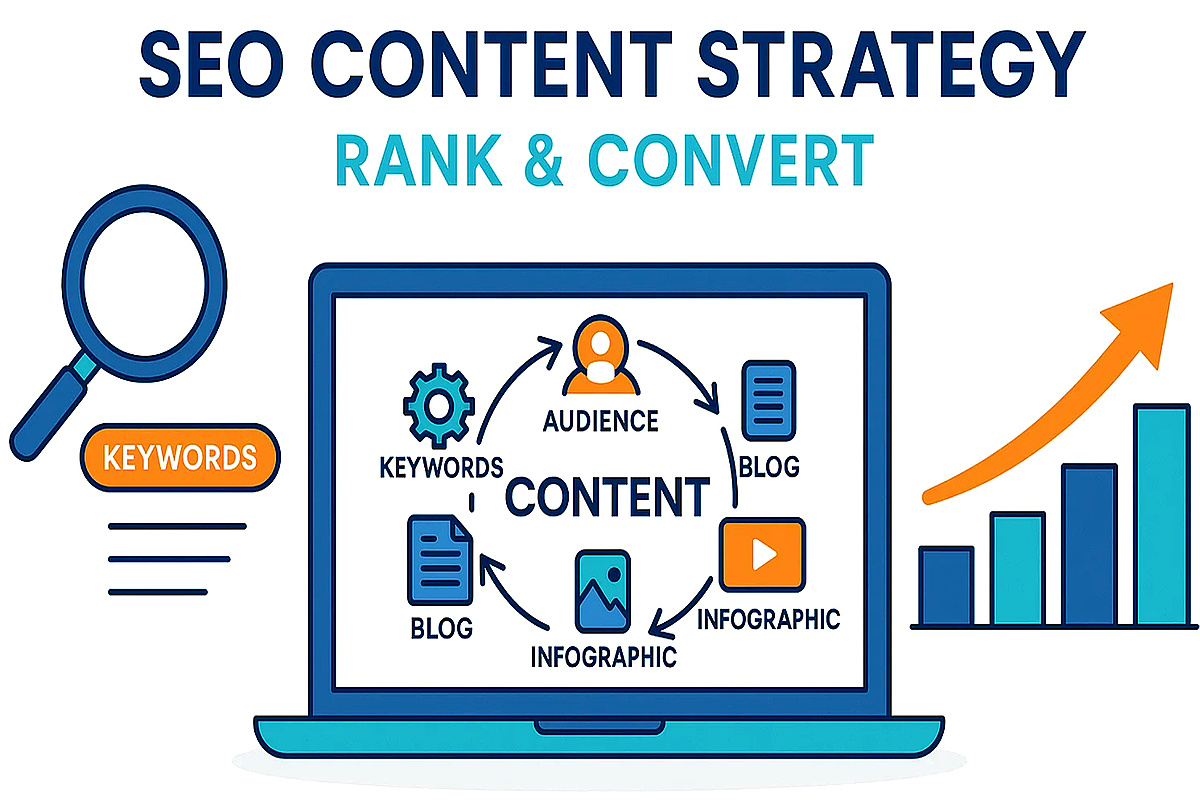
SEO research informs content topics. Instead of guessing what to publish, keyword data reveals what your audience is searching for.
This ensures your blog posts, guides, and landing pages align with actual demand.
Social Media Marketing
High-ranking articles can be repurposed into social media posts. SEO-driven insights can guide content themes and audience messaging.
When your social audience searches for more information, SEO ensures your website supports that journey.
Email Marketing
Organic traffic feeds email list growth. Educational content optimized for search can include lead magnets and opt-in forms.
SEO becomes a consistent source of new subscribers.
Paid Advertising
SEO data can inform paid search campaigns by identifying high-performing keywords and topics.
Instead of channels operating separately, SEO connects them.
Without it, your marketing efforts can feel fragmented. With it, they become integrated and data driven.
SEO Improves Website Quality and User Experience
Modern SEO goes beyond keywords. It includes site speed, mobile responsiveness, structured content, clean navigation, and logical internal linking.
Search engines prioritize user experience. So, when you improve technical performance and readability, you’re supporting both rankings and conversions.
A fast, easy-to-navigate site keeps visitors engaged. Lower bounce rates and longer session times send positive signals to search engines. More importantly, they improve the likelihood that visitors take action.
SEO encourages structure, clarity, and strategic thinking. You can’t optimize effectively without defining your services, target audience, and positioning. You have to prioritize. You have to be specific.
That discipline strengthens your entire marketing approach.
SEO Creates Competitive Leverage
Your competitors are investing in digital marketing.
If they’re optimizing for search and you’re not, they’re capturing visibility that could belong to you.
The advantage is that SEO rewards relevance and expertise, not just size. Smaller businesses may not outrank large corporations for broad terms, but they can dominate niche keywords, local searches, and specialized topics.
You can focus on:
- Local SEO for geographic visibility
- Targeted long-tail keywords
- Building authority in a specific niche
- Publishing specialized, high-value content
SEO allows you to compete strategically instead of trying to outspend larger brands.
And whether you serve a local market or a global audience, SEO adapts. Local optimization increases visibility in “near me” and map searches. Broader content strategies allow online businesses to reach international audiences.
SEO scales with your goals.
SEO Is Measurable and Refinable

Digital marketing should be measurable, and SEO provides clear metrics:
- Organic traffic growth
- Keyword rankings
- Conversion rates
- Engagement metrics
- Backlink acquisition
If a page ranks but doesn’t convert, you refine messaging or calls to action.
If traffic plateaus, you expand keyword targeting.
If competitors outrank you, you analyze and adjust.
SEO encourages ongoing optimization instead of static execution.
It’s also important to be realistic. SEO is not instant. Results take time. But unlike short-term tactics that create temporary spikes, SEO builds durable visibility.
It’s also more than blogging. It includes technical optimization, site architecture, internal linking, structured data, and performance monitoring. It’s comprehensive.
And in competitive industries, it’s not optional. Relying only on ads or referrals limits scalability.
The Long-Term Impact
When SEO is integrated into your digital marketing strategy, the results extend beyond traffic.
You benefit from:
- Increased qualified leads
- Lower acquisition costs over time
- Stronger brand recognition
- Greater trust signals
- Increased resilience during market shifts
SEO doesn’t replace other marketing channels. It strengthens them. It provides the stable foundation that allows paid ads, social media, and email marketing to perform more effectively.
In today’s digital environment, visibility determines opportunity.
SEO ensures your business shows up during research, not just at the point of purchase. And if you’re absent during the research phase, you risk being excluded from consideration entirely.
That’s why SEO isn’t an add-on.
It’s infrastructure.
When implemented strategically and consistently, it turns your website from a static presence into a reliable engine for growth.