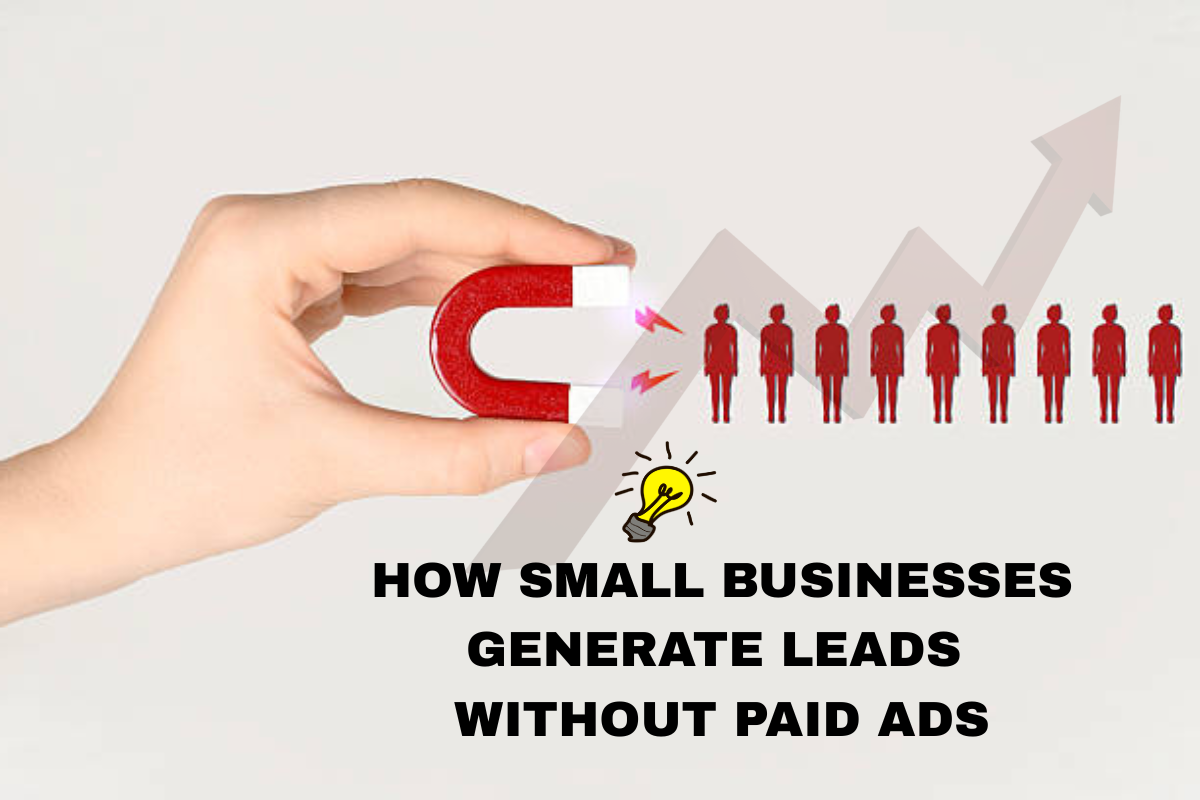
Generating leads is one of the biggest challenges small businesses face.
Many business owners assume paid advertising is the only reliable way to attract new prospects.
It’s a reasonable assumption; ads are everywhere, and they create fast visibility. But they also create a dependency: once you stop spending, the leads stop coming.
Fortunately, paid advertising isn’t the only path to consistent lead generation. Sustainable lead generation comes from building a system that attracts and converts prospects through visibility, trust, and consistent follow-up.
This guide breaks down practical, proven ways to generate high-quality leads without relying on paid advertising.
What High-Quality Leads Actually Mean
Before strategy, clarity matters.
A high-quality lead is not just someone who clicks or inquires. It is someone who:
- Has a real need for your service
- Fits your ideal customer profile
- Has the budget to hire you
- Is actively looking for a solution
- Is likely to convert within a reasonable timeframe
Many businesses confuse lead volume with lead quality.
The goal is not volume. It is precision.
Why Organic Lead Generation Works
Organic lead generation works because it compounds.
Instead of paying for attention, you build assets that continue attracting it:
- Search visibility
- Content relevance
- Authority signals
- Trust over time
But it only works when three layers are aligned:
Visibility → Trust → Conversion
If any of these are missing, leads either don’t arrive or don’t convert.
Most businesses only focus on visibility. That’s where the system breaks.
Several Practical Lead Generation Channels Worth Focusing On
Once the foundation is in place, the next step is identifying the channels and activities that support visibility, trust, and conversion.
While every business is different, the following strategies consistently help small businesses attract higher-quality leads without relying on paid advertising.
1. Build Search Visibility Through SEO
SEO remains one of the highest-intent lead channels because it captures demand already in motion.
Focus on:
- service pages targeting specific keywords
- blog content answering real search queries
- local SEO if you serve specific areas
- clear internal linking between pages
Example search intent:
- “how to get more clients without ads”
- “best marketing service for small business”
- “virtual assistant for entrepreneurs”
If you appear at the moment of search, you are entering a decision process; not an awareness stage.
That difference matters.
2. Turn Content Into a Lead-Attraction System
Content is not about posting. It is about positioning.
Helpful content does three things:
- answers questions
- reduces uncertainty
- builds credibility before contact
Effective formats include:
- blog posts
- case studies
- guides
- FAQs
- comparison content
But the key is specificity. Broad content attracts broad traffic. Specific content attracts buyers.
3. Optimize Your Website for Conversion (Not Just Traffic)
A common failure point: traffic without conversion.
A lead-generating website should be structured around one goal action.
That requires:
- a clear service offering
- a single primary call-to-action
- visible trust signals (reviews, results, proof)
- simple navigation
If visitors have to think about what to do next, conversion drops.
Clarity removes friction. Friction kills leads.
4. Use Lead Magnets That Filter, Not Just Attract
A lead magnet should not just generate emails. It should qualify as an interest.
Weak example:
- “Free marketing guide”
Strong example:
- “5 mistakes stopping your business from getting consistent clients”
The difference is intent filtering.
Good lead magnets:
- solve one specific problem
- attract the right audience only
- align with your core service
This improves both lead quality and conversion rate.
5. Build Authority Through Consistency
People rarely hire on first contact.
They convert after repeated exposure to:
- useful insights
- consistent messaging
- proof of expertise
Authority is built through repetition, not intensity.
You don’t need to publish everywhere. You need to show up consistently where your audience already is.
6. Leverage Referrals and Strategic Partnerships
Referrals are one of the highest-converting lead sources because trust is pre-built.
They come from:
- past clients
- industry peers
- complementary service providers
Examples:
- web designers + copywriters
- consultants + virtual assistants
- agencies + specialists
This is not passive. It requires intentional relationship building and follow-through.
7. Strengthen Local SEO (If Applicable)
For service-based businesses, local intent is often high-conversion.
Focus on:
- Google Business Profile optimization
- consistent business information
- location-based keywords
- customer reviews
Local search traffic is powerful because intent is immediate. These users are not browsing; they are choosing.
8. Capture Leads and Follow Up Systematically
This is where most businesses lose revenue.
Leads do not disappear because of lack of interest. They disappear because of lack of follow-up.
A basic system includes:
- email capture
- CRM tracking
- automated follow-up sequences
Without this, you are constantly restarting conversations instead of continuing them.
Follow-up turns interest into conversion.
9. Use Social Proof to Reduce Friction
Most prospects do not need more information. They need reassurance.
Social proof includes:
- testimonials
- reviews
- case studies
- client results
- portfolio examples
It reduces perceived risk. Lower risk increases conversion speed.
10. Focus on the Right Channels, Not All Channels
You do not need to be everywhere.
You need to be where your customers already pay attention:
- Google (search intent)
- LinkedIn (B2B visibility)
- niche communities
- relevant groups or forums
Consistency in one or two channels outperforms scattered activity across many.
Common Mistakes to Avoid
Most businesses fail at organic lead generation for predictable reasons:
- focusing on traffic instead of conversion
- relying on a single channel
- inconsistent content output
- weak or unclear offers
- no follow-up system
- targeting too broad an audience
Lead generation is not a tactic problem. It is a system problem.
Generating high-quality leads without paid advertising is not about replacing ads with effort.
It is about building a structured system where visibility, trust, and follow-up work together.
When SEO brings attention, content builds trust, and follow-up converts interest, lead generation becomes stable rather than unpredictable.
Over time, this approach does something paid ads cannot guarantee: it compounds.
The result isn’t simply more leads. It’s a predictable system for attracting better-qualified prospects and turning them into customers.